September 14, 2026 • 12:04 PM EDT
Updated 2 hours ago
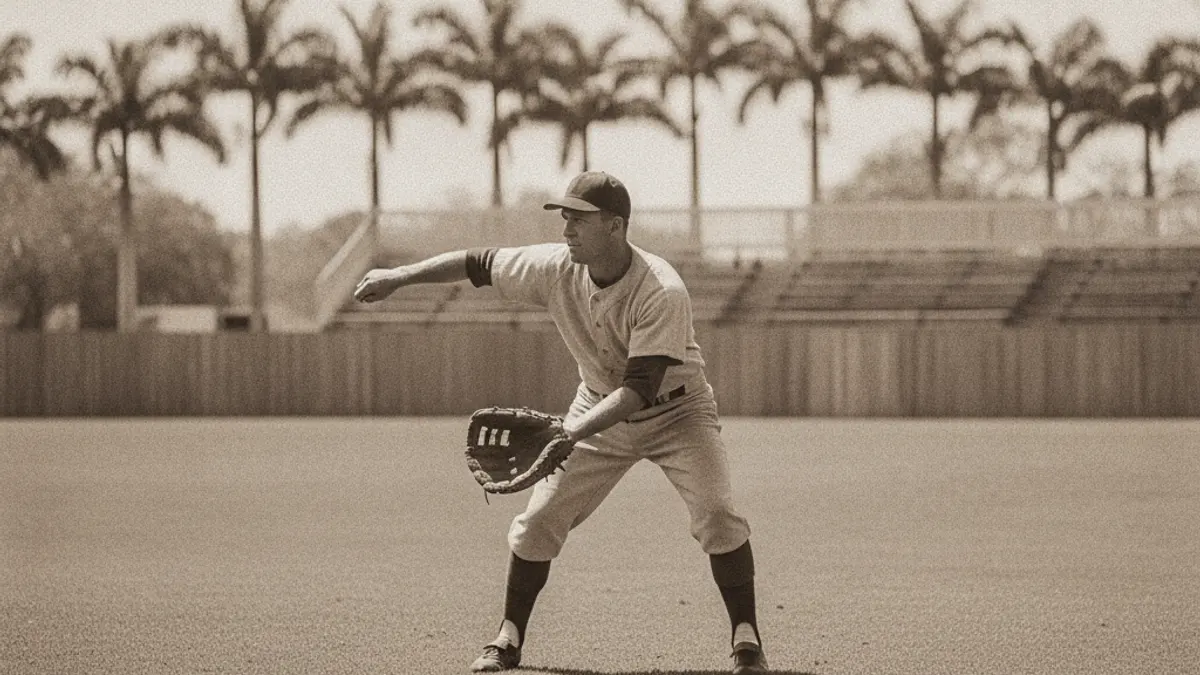
Jerry Coleman isn’t just a name you spot in the Yankees’ long list of champions—he stands out as someone whose career veered repeatedly into heroism. While most big leaguers do their best work between the lines, Coleman bounced between Yankee Stadium and the frontlines of two wars, building a legacy as a ballplayer, a wartime pilot, and one of baseball’s all-time great voices.
He had one of those lives that read like fiction: rookie standout, World Series regular, and the only major leaguer to fly combat missions in both World War II and the Korean War. Forget ‘multi-talented’—Coleman lived three Hall of Fame lives in one. He didn’t just wear pinstripes; he wore a flight suit, and later, a broadcaster’s headset, always bringing the same humble grit to every job he took on. That’s a legacy that puts him in rare company, even by Yankees standards.
According to Yahoo Sports, Coleman grew up in California but signed with the Yankees in 1942, moments after learning about Naval flight school. He was too young to join the service, so he signed for $2,800 with the Yankees and went all-in on baseball—at least until duty called.
By 1949, after service in the Pacific in WWII, he made the Yanks out of spring training and quickly became the guy at second base. And Coleman made his presence felt when it mattered. The 1949 pennant was on the line against Boston and with the pressure at its peak, Coleman delivered a clutch three-run bloop to put New York ahead—crucial, because the Red Sox almost came back in the ninth. That’s how you make yourself part of Yankees lore.
He wasn’t just a one-game wonder. That year in the World Series, he racked up five hits and four RBIs, helping the Yankees top the Dodgers. He’d win three more rings before his playing run was done, stacking titles as part of the 1950s Yankees dynasty. For good measure, he picked up the Associated Press’s American League Rookie of the Year and the Babe Ruth Award, becoming the guy who always showed up in October.
Not Just a Yankee—A War Hero, Twice Over
Baseball paused again for Coleman as the Korean War erupted. He flew 63 combat missions, providing close air support and strikes. Stats on the diamond are one thing, but combat ribbons put things in perspective. Only Coleman can say he squared off against big league hitters and enemy pilots at 10,000 feet. The toll was real—by the time he came back, injuries and years in service had reshaped his playing days.
- Signed with the Yankees but delayed his career to serve in WWII
- Became Yankees’ second baseman in 1949, delivered in high-stakes moments
- Won four World Series rings as a player
- Missed seasons to fly combat missions in Korea, only MLB player with aerial combat in two wars
- Returned to baseball but played limited seasons due to injuries
- Built a beloved broadcasting career after retiring from playing
Back in pinstripes, he played three more years, but after 1957, Coleman hung up his glove. For plenty, that’s a full story. Not even close for him. By 1960, he was calling games, first with the Yankees, eventually becoming the signature voice of San Diego baseball. Yankees fans got to hear him on the call for Mickey Mantle’s 500th homer—imagine being in the booth for that moment.
From the Booth to the Hall of Fame
If you remember Coleman, it might be for his catchphrases—“Oh, doctor!” and “Hang a star on that one, baby!”—instead of his double plays or sacrifice bunts. He was no less of a legend behind the mic, as the Hall of Fame recognized in 2005 with the Ford C. Frick Award. That’s the rarest kind of resume in MLB: impact in the clubhouse, in combat, and in the broadcast booth.
Coleman passed away in 2014, but not before cementing his place as a beloved figure for fans in both New York and San Diego. Maybe the SABR biographer C. Paul Rogers III summed it up best, reflecting on Coleman’s legacy: Coleman “became a bona-fide war hero in two wars, had a baseball playing career that earned him Rookie of the Year and World Series MVP honors, and then transitioned into a Hall of Fame broadcasting career. Through it all, he remained a very humble man with a great sense of humor and an appreciation for his good fortune in surviving two wars and for his ability to play Major League Baseball. Jerry Coleman was not only a San Diego treasure, but an American treasure.”
Key takeaways
- Jerry Coleman’s MLB career got delayed by service in World War II
- Coleman was a postseason difference-maker, not just a regular season player
- Only MLB player to see aerial combat in both WWII and Korea
- Four World Series rings with the Yankees—he was part of the 1950s dynasty
- His career as a broadcaster outlasted his playing days and made him a fan favorite in San Diego
- Hall of Fame recognized him for his broadcasting excellence with the Ford C. Frick Award
- Coleman’s humble, grateful attitude struck a chord with fans and peers alike
- Remember him not just as a Yankee, but as a true American original
More coverage: MLB news coverage, MLB analysis and odds and MLB expert picks.
Related stories
21+ only. Gambling problem? Call 1-800-GAMBLER. The content on this site is for entertainment purposes only. We may earn a commission from affiliate links.

 Login
Login